
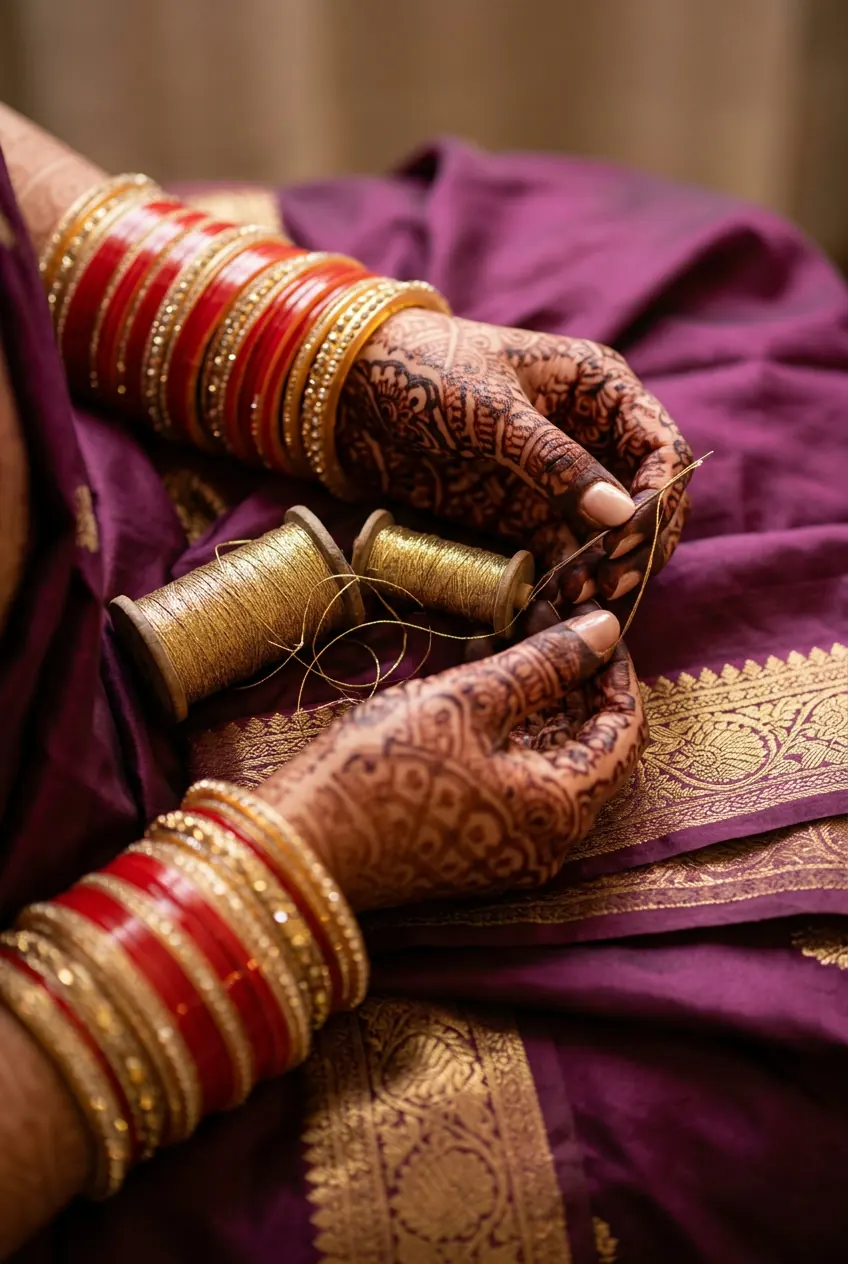
For a darker mehndi stain, keep natural henna paste on for 6 to 8 hours, dab it with lemon and sugar so it stays moist, scrape it off rather than washing, and avoid water for about 12 hours. The stain darkens over 24 to 48 hours, so apply bridal mehndi one to two days before the wedding.
How mehndi colour works
Natural henna contains a dye that binds to the outer layer of your skin. When the paste comes off, the stain is a bright orange. Over the next one to two days it oxidises and deepens to a reddish brown, sometimes close to maroon on the palms. So the colour you see when you scrape is not the colour you will have on your wedding day.
That also explains the rules below. Everything that helps is about giving the dye more time in contact with the skin, and then giving the stain time to develop without being washed or scrubbed away.
Start with good paste
- Natural henna paste, freshly mixed, with no chemical dyes. Ask your artist what is in it.
- Avoid black henna. It often contains PPD (para-phenylenediamine), a hair-dye chemical that can cause serious skin reactions and scarring. Health Canada has warned against it.
- Be wary of paste that promises a very dark colour within an hour. Natural henna does not work that fast.
- If you have sensitive skin or allergies, ask for a small test spot a few days before.
At our studio we mix our own paste every week with no PPD and no black henna, and every client gets an aftercare card.
Before the mehndi
- Finish waxing, scrubbing and body polishing before your mehndi, not after. Exfoliating over fresh mehndi lifts the stain.
- Get your manicure and pedicure done first.
- Wash your hands and feet with plain soap and dry them well. Skip lotion or oil on those areas that day, as it can block the paste.
- Wear something loose with sleeves that roll up easily, and something you do not mind getting stained.
- Eat before you sit down. Bridal mehndi from hands to elbows plus feet takes about four hours.
Aftercare, step by step
- While it driesKeep still and warm. Rest your hands on a cushion and let someone else handle your phone.
- After 30–60 minutesDab a little lemon juice mixed with sugar on the dry paste with cotton. It helps the paste stay moist and stick to your skin. Do not soak it.
- 6–8 hoursLeave the paste on as long as you comfortably can. Many people sleep in it, with hands loosely wrapped in tissue or a soft cloth.
- RemovalScrape the dried paste off with a blunt knife or the back of a spoon. Do not wash it off.
- First 12 hoursAvoid water as much as you can. If you must, keep it brief and pat dry.
- Next 24–48 hoursLet the colour develop. Stay warm, avoid chlorine pools, hot tubs, harsh soaps and hand sanitiser on the design.
Timing for your wedding
Because the stain peaks a day or two after application, bridal mehndi is best one to two days before the wedding. Two days before tends to give the deepest colour on the day; one day before still works well. Earlier than three days and the colour may already have started to fade on the backs of your hands.
Plan family rituals around it. The chooda ceremony and tying of kalire often happen on the wedding morning or the day before, and nobody will mind if you keep your hands out of the washing-up that week.
Why some areas stain darker
Palms and the inside of fingers usually stain darkest because the skin there is thicker. The backs of hands, wrists and arms are lighter, and feet often stain well. This is normal and not a sign of weak henna or a bad artist.
Individual skin chemistry, body warmth and even the weather change the result. In a cold Surrey winter, keeping your hands warm after removal genuinely helps. Nobody can honestly promise you a particular shade, and you should be suspicious of anyone who does.
Folklore: helps, harmless or skip
| Tip | Our view |
|---|---|
| Lemon and sugar seal | Helps keep paste moist and in contact |
| Keep paste on overnight | Helps, if you can sleep comfortably |
| Clove smoke or warming hands | Warmth helps; be very careful with smoke and heat near paste and skin |
| Pickle oil, tea, coffee in the paste | Leave paste recipes to your artist |
| Bleach or chemical darkeners | Skip. Never put these on skin |
| Scrubbing to make it even | Skip. It fades the stain |
Making it last
A good natural stain usually lasts one to three weeks, fading gradually as skin renews. Moisturise the area, avoid scrubbing, and wear gloves for cleaning. When it starts to fade unevenly, a gentle exfoliation helps it fade evenly rather than in patches.
Questions
How long should I keep mehndi on for a dark colour?
Six to eight hours, or overnight if you can sleep comfortably. Seal it with lemon and sugar so it stays moist.
Should I wash mehndi off or scrape it?
Scrape it off with a blunt edge. Avoid water for about 12 hours afterwards if you can.
How many days before the wedding should I do mehndi?
One to two days before. The stain darkens over 24 to 48 hours, so two days often gives the deepest colour on the day.
Why is my mehndi orange?
Fresh henna is always orange when the paste comes off. It deepens to reddish brown over the next one to two days.
Is black henna safe?
No. Black henna often contains PPD, which can cause serious skin reactions. Health Canada has warned against it. Use natural henna only.
Can I wax after my mehndi?
Wax before mehndi, not after. Waxing and scrubbing over fresh mehndi lifts the stain.